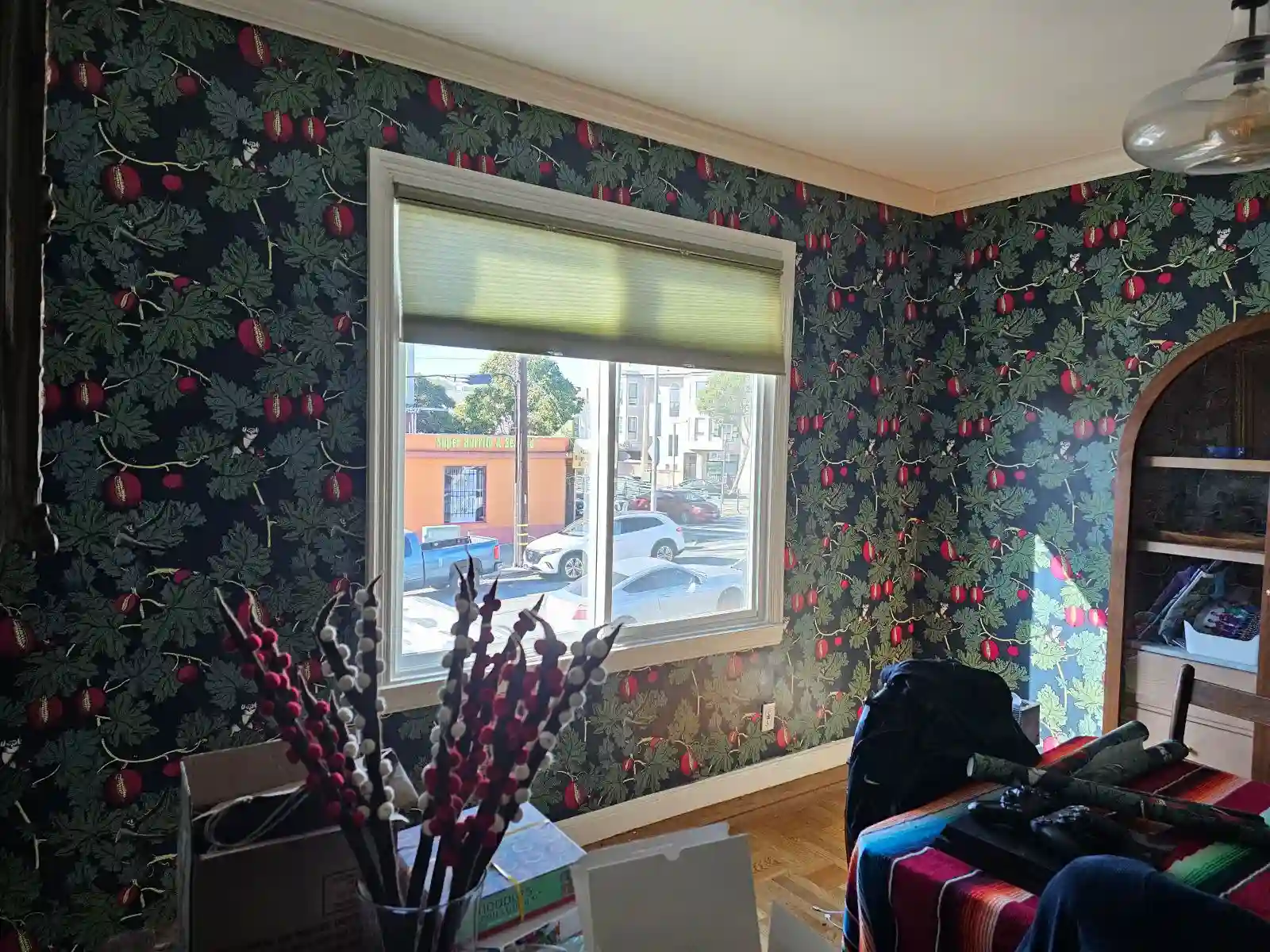
1. Look at the wall, not only the wallpaper.
A clean, dry, sound surface is a sensible place to start. Loose paint, leftover adhesive, uneven areas, dust, moisture, or a textured finish can affect how a wallcovering meets the wall. What preparation is appropriate depends on the specific surface and product, so product-label instructions and a conversation about the wall matter more than a universal recipe.
If there is an existing wallcovering, peeling or removal may reveal a different surface underneath. Mention what is currently on the wall if you know; it helps set up a useful conversation about removal and wall preparation.
2. Note the repeat and the roll details.
Some patterns are random, while others require a straight or offset match. The repeat can affect how much material is needed and how each strip is positioned. Roll labels may also show product or batch information worth keeping together. Before installation, the wallpaper itself should be checked against the order and its manufacturer’s instructions.
If you already have the product, keep the label or specification nearby. It can help answer questions, but you do not have to identify every detail before making an initial call.
3. Treat each material according to its instructions.
Traditional wallpaper, peel-and-stick products, and specialty wallcoverings do not all use the same application method. Adhesive, primer, surface suitability, panel orientation, and care guidance may vary by product. For self-adhesive wallpaper in particular, a smooth and clean surface and the manufacturer’s instructions are important considerations.
When a product is unfamiliar, its label or installation guide is the most useful reference for product-specific requirements. A wallpaper installer can then discuss how those requirements relate to the room and wall.
4. Share the project context you already have.
For a first estimate conversation, it may help to know the project city, which room or walls are involved, whether there is old wallpaper, and whether you have chosen a product. Approximate dimensions or a photo may help make the scope clearer later; they are optional, not prerequisites for calling or sending a simple request.
Not ready with measurements?
A phone conversation can still be a useful first step. Ask what details would help next.
Questions people ask before wallpaper installation.
Can I call before I know my wall measurements?
Yes. You can describe the room and what you are thinking about in everyday language. Measurements can be helpful later, but they are not required to make an initial call.
Does every wallpaper need the same wall preparation?
No. Surface condition and product instructions differ. Clean, dry, sound walls are a helpful starting point, but the right preparation should be considered for the specific wall and wallcovering.
Can I ask about peel-and-stick wallpaper installation?
Yes. Peel-and-stick wallpaper installation is an offered service. Product requirements for surface texture, cleanliness, paint condition, alignment, and application should be checked before work is arranged.
Can existing wallpaper be removed before a new installation?
Wallpaper removal is available. Because layers, adhesive, and the wall beneath them vary, the next preparation step depends on what is found and on the new product’s requirements.
Can an on-site assessment or measurements be arranged?
Call to ask whether a visit would be appropriate for your project. Any on-site consultation, inspection, or measurements are by request and subject to confirmation.
What if I have not chosen the wallpaper yet?
You can still ask questions and discuss the room. If you later choose a product, its label and installation instructions can help clarify material-specific requirements.
For general reference, the Wallcoverings Association’s surface-preparation guidance and its standard residential installation guidance explain why surface condition and pattern matching deserve attention. Always follow the instructions supplied with the selected product.